
Ten systems.
Honest tradeoffs.
Every storage system buys you something and costs you something else. Density costs selectivity. Selectivity costs cube. We publish both sides so the decision is made before steel is ordered - not after.
Density and selectivity pull against each other
Density is how many pallets fit in a given footprint. Selectivity is how many of those pallets you can reach right now, without moving another one. No system scores five on both - and any vendor who tells you otherwise is selling, not specifying.
Start with SKU count
A few SKUs in large volume wants deep lanes. Many SKUs in small volume wants selective positions. Most buildings need both, in different zones.
Then decide flow
LIFO is fine for non-perishable, non-dated stock. Dated or lot-controlled product needs FIFO, and that narrows the list quickly.
Then look up
Most conventional buildings waste the cube above lift-truck reach height. That unused air is usually the cheapest capacity available to you.
Pallet rack systems
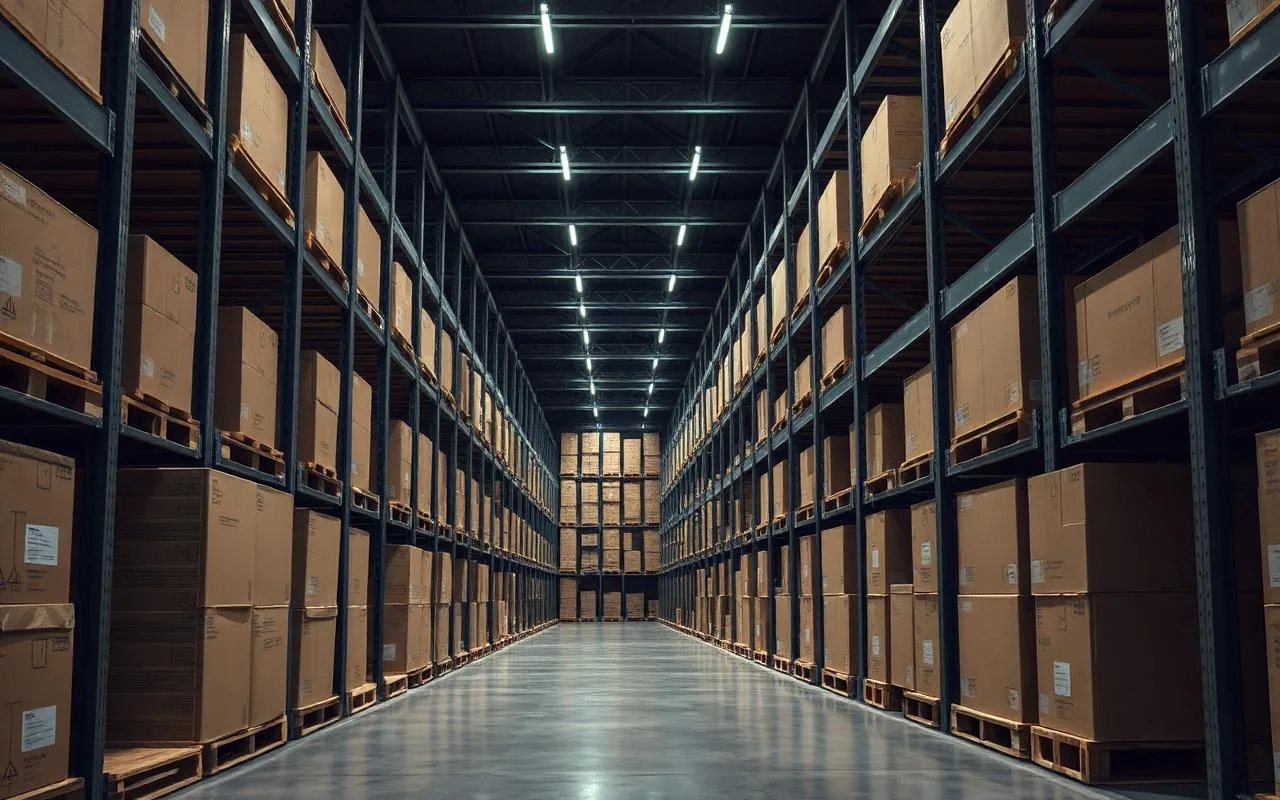 01SELECTIVE
Single-Deep Select Rack
The baseline. Every pallet is directly accessible, and the cost per position is the lowest of any system we sell.
- Lane depth
- 1 deep
- 100% SKU selection
- Low cost per pallet position
- Easy to configure and reconfigure
- Flexible slotting design
- Lowest storage density of any system - aisles consume the majority of the footprint
- Cube utilization is limited by lift-truck reach, not by building height
Best forHigh turnover, high SKU count, quick access.
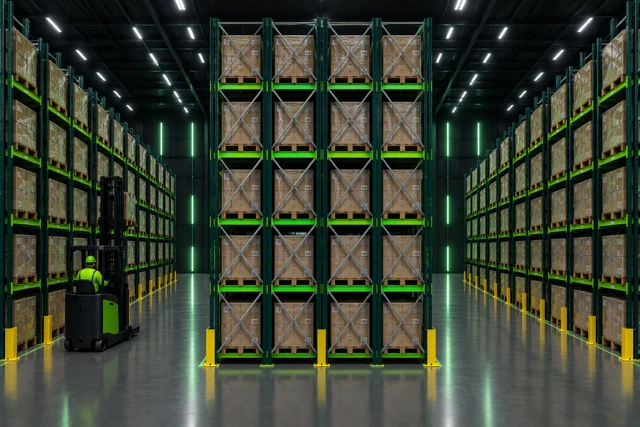 02LIFO
Two Deep Select Rack
Widely regarded as the best blend of density and selection.
- Lane depth
- 2 deep
- Roughly 50% increase in pallet positions
- Low initial capital investment
- Uses existing conventional rack logic
- Poor visibility of loads in the rear position
- Lack of visibility can lead to product and rack damage
- An additional handling step is required to reach the rear pallet
- Storing and retrieving the rear pallet at height can be challenging
- Last In / First Out only
Best forMultiple pallets per SKU where date rotation is not critical.
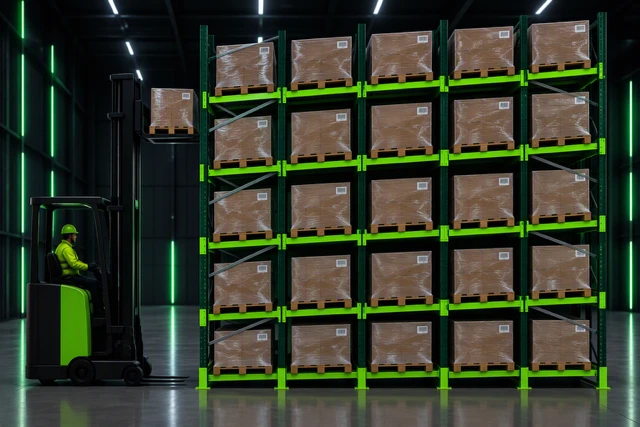 03LIFO
Pushback Rack
Cart-and-rail density that still picks like selective rack at the aisle facing pallet position. Improves existing storage density by up to 65%.
- Lane depth
- 2–6 deep
- Improves existing storage density up to 65%
- High selectivity for a high-density system
- Ideal for fast-moving SKUs
- Reduces rack damage versus drive-in
- Last In / First Out only
- Each lane should hold a single SKU to stay efficient
- Higher cost per position than selective rack
Best forFood and beverage distribution, 3PLs, pharmaceutical, manufacturing.
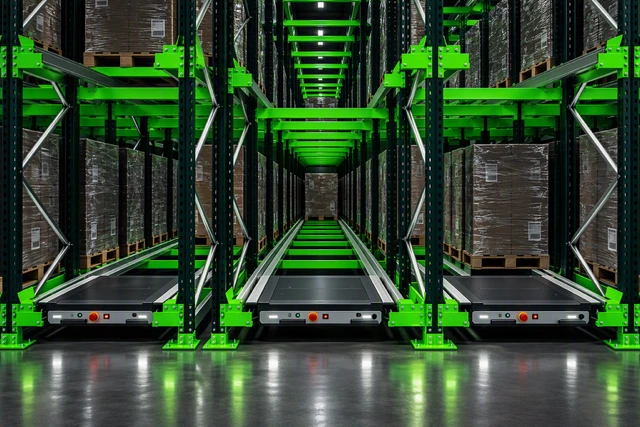 04MIXED
Deep Lane Storage
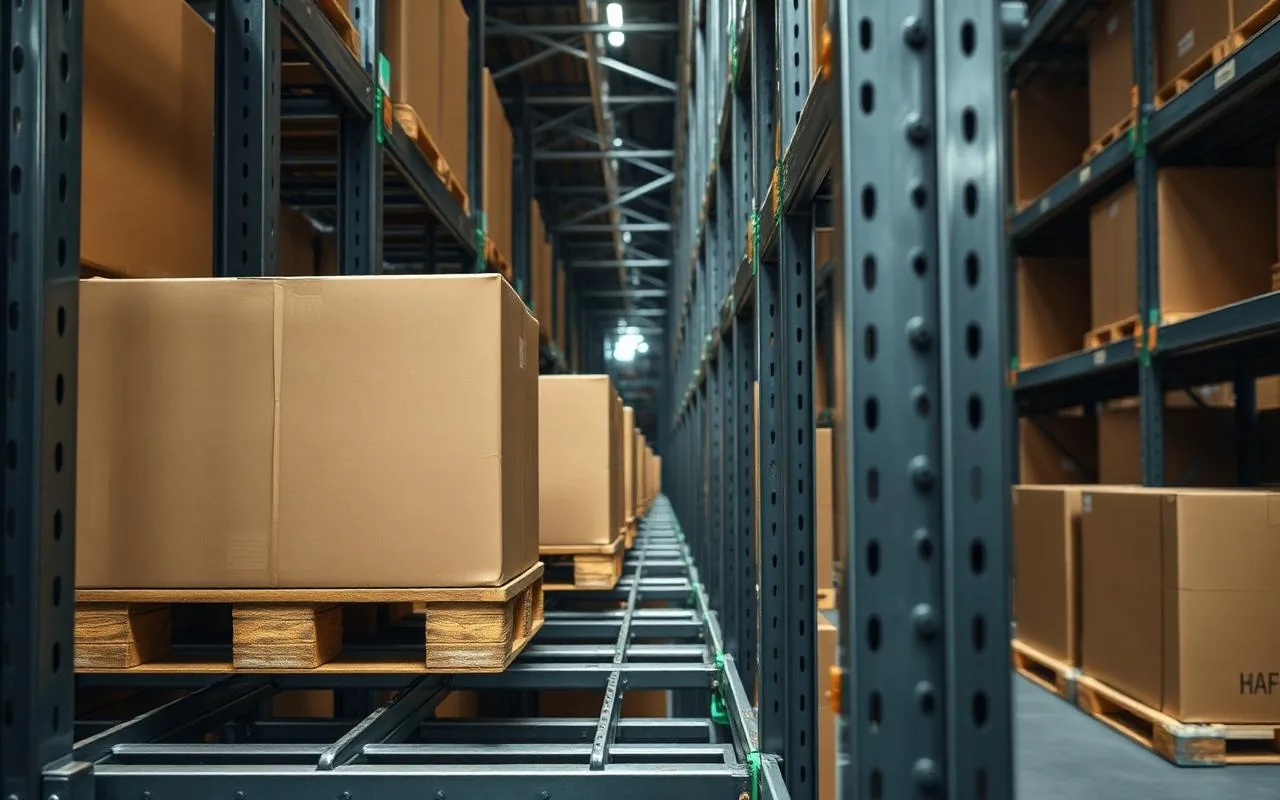
Pallets are stored and retrieved by a shuttle inside the lane, so lane depth is no longer limited by a forklift's reach.
- Lane depth
- Unlimited
- Maximum utilization of cube
- Low operating cost
- Pallets stored and retrieved by pallet shuttle
- LIFO and FIFO possible in the same installation
- Selectivity drops as lanes get deeper - best with one SKU per lane
- Requires a shuttle and an operator or crane to reposition it between lanes
Best forSmall SKU counts and large volumes. Food, beverage, cold storage.
 05FIFO
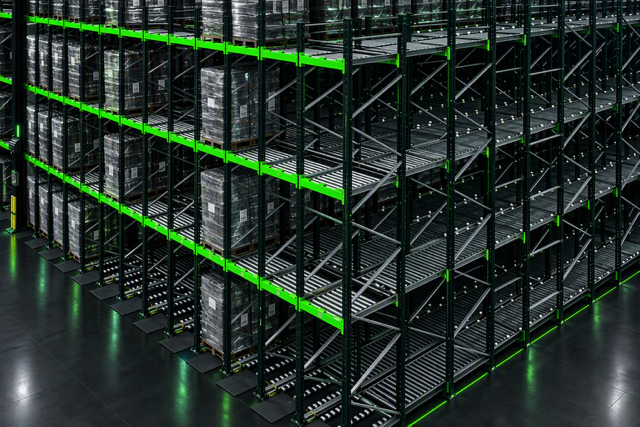
Pallet Flow Rack
Gravity-fed FIFO. Excellent rotation and throughput, and the most maintenance-intensive system on this page.
- Lane depth
- Multi-deep
- True FIFO rotation
- High density
- Efficient picking and unloading
- Immediate access to product at the pick face
- High cost per pallet position
- Requires consistently good pallet quality
- Many moving parts - likely the most intensive maintenance requirement of any system here
- Limits SKU count
- Limits selectivity
Best forDate-sensitive product with a small number of high-volume SKUs.
 06MIXED
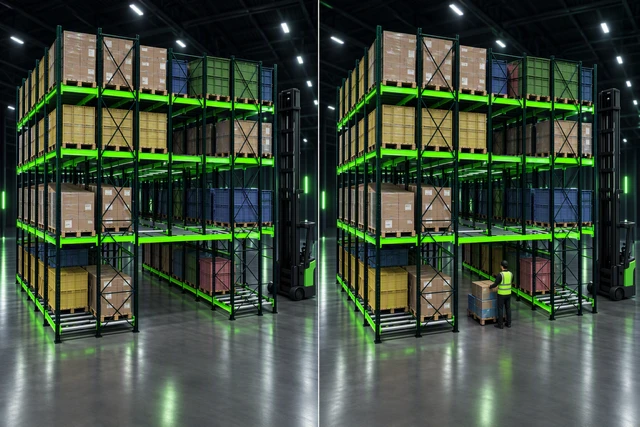
Pick Tunnel Rack
Separates picking from storage by putting reserve product directly above the pick aisle.
- Lane depth
- Varies by reserve system
- High volume, single-level picking operations
- Reserve product stored over the picking aisle
- Reserve held in pushback, pallet flow, or 2-deep select rack
- Minimal movement of reserve product
- Separates picking and storage
- High throughput
- More complex to design and slot than a single system
- Replenishment discipline is required or the pick face starves
Best forHigh-volume case pick operations with dense reserve above.
 07LIFO
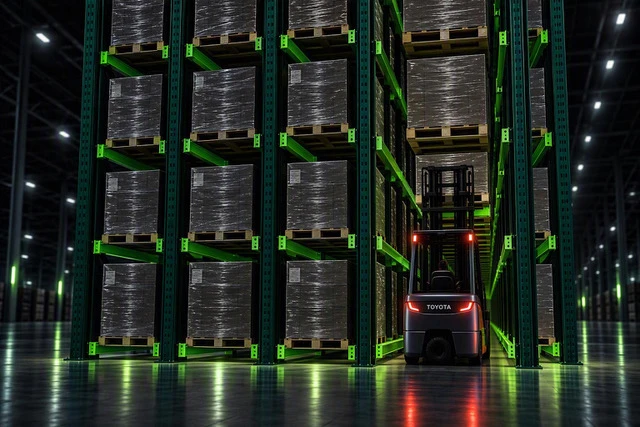
Drive-In Rack
The lowest-cost route to high density, and the least forgiving system we sell. We will tell you when it is wrong.
- Lane depth
- Multi-deep
- High-density pallet storage
- Low cost versus other high-density systems
- Configurable with pushback rack above
- Inflexible - does not accommodate SKU increases
- Low productivity; the lift truck enters the structure
- Requires standardized pallets
- Real risk of rack and product damage
- Last In / First Out only
- Not recommended for time-sensitive SKUs
Best forVery few SKUs, very high volume, stable product profile.
 08FIFO
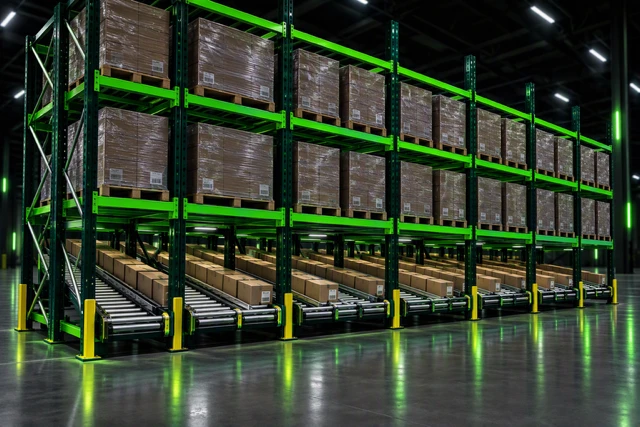
Case Flow Rack
Gravity case picking at the face. Stands alone or drops into a larger rack structure or pick module.
- Lane depth
- Case-deep lanes
- FIFO at the case level
- Gravity-based - no power required
- Ideal for case and order picking
- Stand-alone or integrated into rack structure and pick modules
- Multiple roller types available (wheel rail, full-width conveyor rollers)
- Requires steady replenishment labor behind the pick face
- Carton quality and consistency drive reliability
Best forEach and case picking at a dense, ergonomic pick face.
 09MIXED
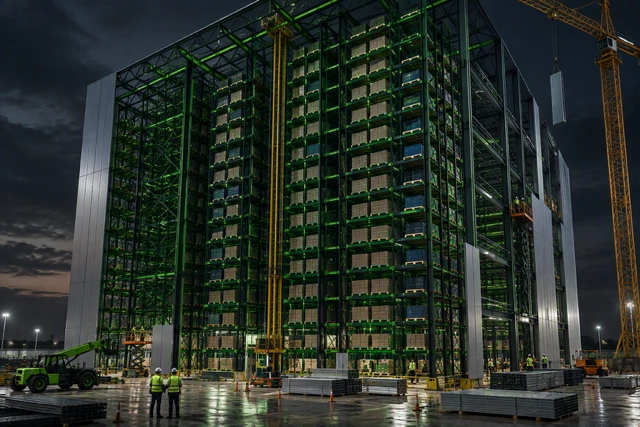
Clad Rack Warehouse
The rack becomes the building. Walls and roof hang off the storage structure, so there are no interior columns.
- Lane depth
- Per system
- Turnkey solution
- Integrates directly with AS/RS
- Eliminates building columns
- Maximum storage density
- Uses height, not land mass
- Most economical solution per position at scale
- The structure and the storage system are one decision - reconfiguring later is a construction project
- Requires site permitting and a longer lead time than rack inside an existing shell
Best forNew high-density facilities where land cost is the constraint.
 10SELECTIVE
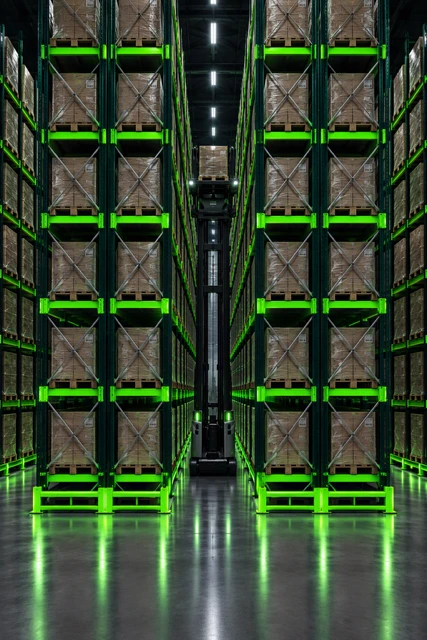
Very Narrow Aisle Racking (VNA)
A high-density system that delivers the best combination of density and selection.
- Lane depth
- 1 deep
- Standard selective rack with very narrow aisles - 50+% more pallet storage in the same footprint
- High density storage
- 100% selection - immediate access to all pallets at all times
- Highly efficient
- Universal (works for all industries)
- Flexible and adaptable to changing needs and load heights
- Gateway to automation with cranes / aisle-changing robots
- Specialized lifts required
Best forOperations that need high density without giving up selectivity.
Send us your SKU profile
Give us pallet counts, SKU count, throughput targets and your building dimensions. We will come back with the two or three systems that actually fit - and tell you which of them we would not recommend for your operation.